Pop Color: Painting & Coloring
- 4.1
- Rating
- 1.00M
- Installs
- Free
- Price
 Analysis by App-foxy
I tried Pop Color: Painting & Coloring as a quiet, low-pressure way to spend a few minutes with my phone, and its appeal became clear quickly: it is built around coloring rather than competition, complicated tools, or a demanding creative workflow. That makes it an easy app to open when I want something gentle after work, while waiting for an appointment, or when I need a break from more stimulating apps.
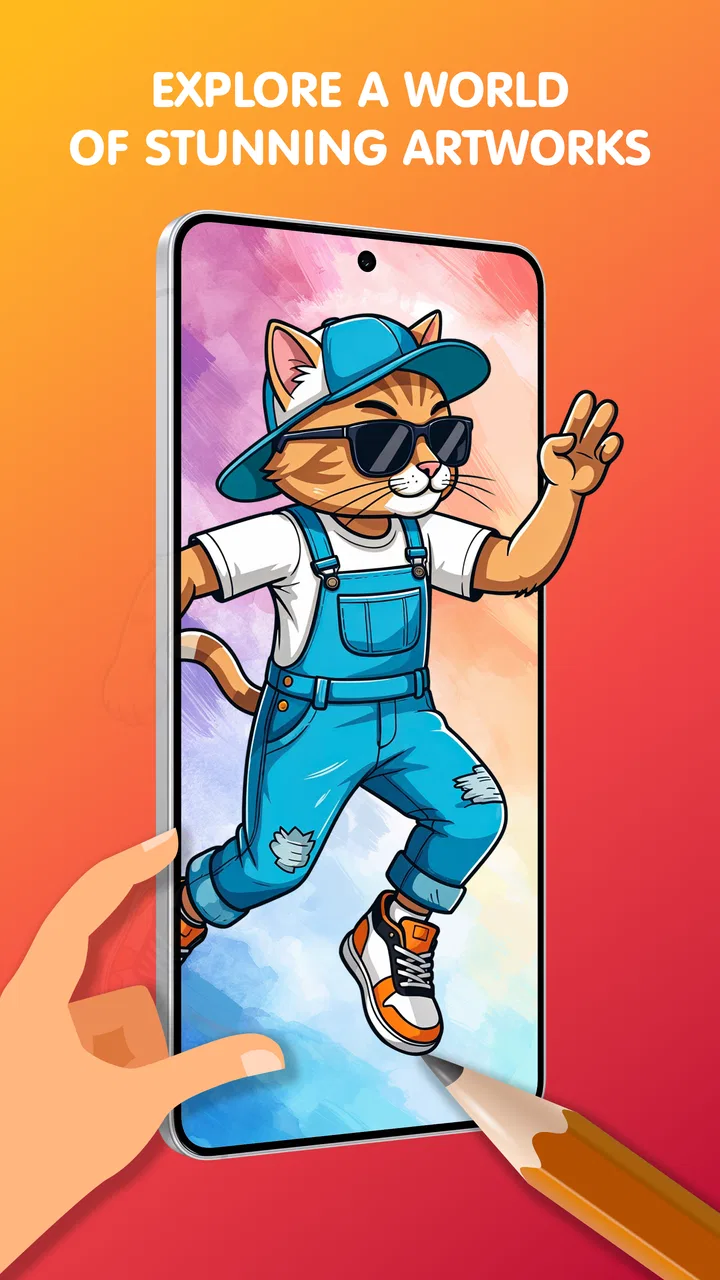
It belongs to the personalization side of Android apps, although I found its practical use closer to a digital coloring book than to a traditional customization utility. The basic idea is simple: choose an illustration, fill areas with color, and gradually turn an outline into a finished image. The store summary presents it as a relaxing way to create art without stress, and that description matches the experience better than any promise of professional drawing power would.
The app is free to install and is suitable for Everyone. Panda Tool is the developer behind it, and the current release is version 1.7. It has reached over a million installs, which suggests that the straightforward coloring concept has found a sizeable audience. Its average score is 3.8, so I would not approach it expecting universal approval; there is enough room for personal preference and device-specific friction to matter.
You May Also Like

 Blood Strike: 2.5 Anniversary
Blood Strike’s Loadouts Turn Every Drop Into a Tactical Gamble
A close look at Blood Strike’s custom loadouts: how fast access to signature weapons reshapes its battle royale rhythm, rewards preparation, and narrows the gap between fights.

 Pandora - Music & Podcasts
Pandora’s Music Is Easy to Start, but Harder to Recover
Pandora’s strength is its low-effort path from a seed to a station. Its weak spot is how much confidence it asks you to place in connection, setup, and quiet recovery.

 8 Ball Pool
 Is Built on Rivalries, Rematches, and Routine
A close look at the rivalries, rematches, shared routines, and unanswered safety questions that turn a quick pool match into a persistent mobile community.

 Samsung Music
’s Quiet Strength Is Playing What You Already Own
Its reach comes less from spectacle than from dependable access to a personal library. That simplicity is both the app’s strongest retention engine and its ceiling.

 AccuWeather: Weather Radar
AccuWeather Review: A Quick, Clear Forecast for Everyday Decisions
For everyday plans, the best forecast is the one you can understand quickly. AccuWeather makes rain timing, radar, and local conditions easy to act on, with a few trade-offs.

 Hill Climb Racing
Why Hill Climb Racing Still Turns Crashes Into One More Run
A tiny car, a bumpy hill and one more upgrade: Hill Climb Racing keeps resurfacing because its simple chaos makes every near-miss feel personal.
More From Our News Desk



How the current experience feels in everyday use
My first impression was that the app is easier to understand than many drawing tools. I did not have to learn layers, brushes, opacity controls, or a complicated canvas system before doing anything useful. The coloring format gives the session a clear beginning and end: pick a picture, work through its sections, and stop when the image feels complete.
That structure is especially helpful for people who like creative activities but do not consider themselves artists. With a conventional sketching app, a blank page can feel like a challenge. Here, the outline provides direction. I can focus on choosing a mood and a color combination instead of worrying about whether I can draw a recognizable object from scratch.
The strongest part of the experience is its low mental demand. I can use it while listening to a podcast or sitting on the sofa without feeling that I need to give the screen my full attention every second. It is not a replacement for meditation, and I would not claim that it automatically reduces stress for everyone, but the repetitive act of filling spaces can be pleasantly absorbing.
A realistic example is a short evening pause. After answering messages and finishing household tasks, I might open a picture, color a few areas, and leave before completing it. That partial session still feels worthwhile. The app does not require me to commit to a long project, which is one reason I find it more approachable than a full illustration program.
The best fit for casual creative breaks
I think the app works best for three kinds of users. The first is someone who wants a screen-based coloring book with very little setup. The second is a parent or family member looking for an accessible creative activity for a broad age range, keeping in mind that the Everyone rating describes its content suitability rather than guaranteeing that every design will appeal to every child. The third is an adult who enjoys visual repetition and wants a simple way to occupy idle time.
It can also suit people who are intimidated by blank canvases. The guided format lowers the barrier to entry, and the result is usually more satisfying than an unfinished sketch because the image already has a recognizable structure. I found that useful on days when I wanted to make something but did not have the energy to invent a subject, composition, and technique.
There is a small but important workflow advantage in treating each session as a color study rather than a final artwork. I can deliberately use a limited palette, such as warm colors for one picture and cooler tones for another, instead of tapping random shades. That turns a basic activity into a way to practice visual balance without needing drawing skills.
Where it differs from ordinary drawing apps
Compared with a standard sketching app, this is much less flexible. A drawing program gives me control over line weight, brush texture, erasing, layering, and freehand marks. Pop Color is better when I want guidance and completion; a drawing app is better when I already have an idea and need the tools to express it precisely.
It also differs from physical coloring books in a practical way. I do not need paper, colored pencils, storage space, or cleanup. On the other hand, I lose the tactile feeling of paper and the ability to see a physical page away from a screen. If the main reason I enjoy coloring is the feel of the materials, a printed book remains the better choice.
Against more elaborate digital coloring platforms, the attraction is simplicity. The trade-off is that users who expect extensive customization, advanced coloring controls, or a large creative workspace may find the experience narrow. I would choose this app for a calm, guided activity, not as my main artistic tool.
Small habits that make the app more enjoyable
I got better results when I chose a color direction before filling the first area. Even a loose plan, such as keeping the background light and using stronger colors for the central subject, made the finished image feel more intentional. Without that pause, it is easy to select colors one section at a time and end up with a busy result.
Another useful habit is to treat the first pass as experimentation. I do not need to protect every choice. Trying an unexpected color in a small area can reveal whether the picture benefits from contrast. This is more comfortable than experimenting on a blank canvas because the underlying drawing already provides structure.
I also recommend using shorter sessions instead of forcing completion. The app’s relaxing quality can disappear if I turn every image into a task that must be finished immediately. Saving the remaining sections for another break keeps the activity recreational and makes it easier to return to without feeling behind.
For anyone using it as a family activity, I would set a simple challenge rather than giving instructions about what the picture should look like. Asking each person to choose a different mood or palette encourages creativity while preserving the app’s accessible nature. That approach makes the guided format feel less repetitive.
What has changed, who benefits, and what still needs attention
The release history matters here because version 1.7 shows that the app is being presented as a current product rather than an abandoned experiment. I noticed that the overall identity remains focused: this is still a coloring-first experience, not an app that has expanded into a general-purpose art studio. That consistency is positive for newcomers because the purpose is easy to understand.
At the same time, I would separate the confirmed current version from any assumption about future development. A version number alone does not tell me that a major feature has arrived, so I would not install it expecting a particular tool or content expansion based only on the release label. What I can say is that the present edition is aimed at an uncomplicated coloring routine, and existing users can continue approaching it in that way.
For someone upgrading from an earlier installation, the practical benefit is mainly having the current build rather than relying on an older one. I would update before judging the experience, especially if the app behaves differently on a particular phone. The minimum requirement is Android 7.0, which keeps it accessible to many older devices, although compatibility on paper does not guarantee identical smoothness across every handset.
The free entry point is another reason it is easy to try. However, the app includes in-app purchases ranging from $5.99 to $19.99 per item. I would pay attention to what is available before treating the free version as a complete long-term library. The presence of purchases does not make the app unsuitable, but it changes the value calculation for anyone who expects every part of the experience to remain open without spending.
This is where I think the 3.8 average provides useful context. The concept is accessible, but enjoyment depends on how much variety, control, and uninterrupted access each person expects. Someone satisfied with occasional coloring may consider the free experience enough. Someone who wants a deep collection or a highly customizable workspace may judge the purchase structure more critically.
Limitations I would consider before installing
The biggest limitation is the fixed nature of guided coloring. I can make choices inside the supplied artwork, but I am not using the app to create a completely original composition. If my goal is to draw a personal portrait, design a logo, annotate a photograph, or build a detailed illustration, I would skip this and choose a more capable creative application.
The second limitation is that relaxation is not the same as depth. Repeated coloring can be soothing, but the novelty may fade for users who need constant challenges or a strong sense of progression. I would not select it for competitive motivation, structured lessons, or a serious skill-building curriculum. Its value is in the moment-to-moment activity, not in turning every session into a measurable achievement.
The purchase range may also affect whether it feels generous enough over time. Since the app is free to start, I can test the basic rhythm without committing money. I would keep that trial period honest: use it for several short sessions, see whether I naturally return, and only then decide whether any paid item is worthwhile. Paying simply because I have already spent time exploring would be a poor reason.
There is also a difference between using a phone for a quick break and using a tablet for a longer session. On a smaller screen, detailed areas can feel less comfortable to work through, particularly if I am trying to be precise. A larger display may make coloring more pleasant, but I would still choose a dedicated drawing tool when precision and freedom matter more than ease.
Who should choose an alternative
I would point a child or adult who wants open-ended drawing toward a sketching app instead. That option is more suitable when the user wants to invent the image, mix techniques, or correct a design at a detailed level. I would recommend a physical coloring book to anyone who specifically wants a break from screens or enjoys selecting real materials.
I would also suggest looking elsewhere if the main requirement is a strong long-term progression system. Pop Color is not the app I would choose for lessons, competitions, social sharing, or a portfolio workflow. Its appeal is quieter and more private: it gives me a prepared visual task and lets me spend time with it at my own pace.
On the other hand, people who find conventional art software overwhelming may be worse served by those alternatives. The absence of advanced controls is a weakness for experienced artists, but it is also what keeps the first session approachable. The right choice depends on whether I value freedom or guidance more.
What I would watch as the app develops
For future updates, I would pay attention to how Panda Tool balances simplicity with variety. Adding more options can make a coloring app more useful, but too many controls could undermine the calm, immediate experience that currently defines it. The best evolution would preserve the short-session workflow while giving returning users meaningful reasons to come back.
I would also watch the relationship between the free experience and the in-app purchases. Clear value matters more here than a long feature list. If paid content expands, I would want the basic version to remain a fair way to understand the app rather than functioning only as a preview.
Another area worth observing is how well the app continues to serve different screen sizes and older Android devices. The Android 7.0 minimum makes broad access part of its appeal, so maintaining a comfortable experience across compatible phones would support the product’s casual, everyday role.
My final view is positive but specific. Pop Color: Painting & Coloring is a good choice when I want guided creativity, a gentle pace, and a task I can begin without preparation. I like it most as a short evening reset or an easy activity for someone who does not want the pressure of a blank canvas.
I would not call it a replacement for professional drawing software, a physical coloring book, or a feature-rich creative platform. Its limitations are closely tied to its strength: it keeps the process simple by giving up much of the control and depth those alternatives provide. If that trade-off matches what you want, the free starting point makes it reasonable to try. If you need original drawing, advanced tools, or substantial progression, choosing another option will make more sense.
FAQs for Pop Color: Painting & Coloring
01What is Pop Color: Painting & Coloring, and what can I do with it?
Pop Color: Painting & Coloring is a vibrant app designed for art enthusiasts who enjoy coloring and painting. It offers a wide range of coloring pages with various themes such as animals, landscapes, and abstract designs. Users can choose from an array of colors and tools to create unique artworks, making it suitable for both beginners and experienced artists.
02Is Pop Color: Painting & Coloring free to use, or are there in-app purchases?
Pop Color: Painting & Coloring is free to download and use, offering a selection of coloring pages and basic tools at no cost. However, the app also provides in-app purchases for users who wish to access premium content, including exclusive designs and advanced tools that enhance the coloring experience.
03What devices are compatible with Pop Color: Painting & Coloring?
Pop Color: Painting & Coloring is available for both Android and iOS devices. It requires Android version 5.0 or later and iOS version 11.0 or later. The app is optimized for both smartphones and tablets, ensuring a seamless experience across different screen sizes.
04Does Pop Color: Painting & Coloring offer any offline features?
Yes, Pop Color: Painting & Coloring allows users to access downloaded coloring pages and work on them offline. This feature is particularly useful for users who want to enjoy coloring without an internet connection, making it perfect for travel or areas with limited connectivity.
05How can I share my completed artwork from Pop Color: Painting & Coloring?
Once you complete a coloring page, Pop Color: Painting & Coloring offers easy sharing options. Users can save their artwork to their device’s gallery or share directly to social media platforms like Instagram, Facebook, and Twitter. The app also supports sharing via email and messaging apps, allowing you to showcase your creativity with friends and family.
Pros
- Intuitive interface for easy use.
- Wide variety of colors and tools.
- Regular updates with new content.
- Supports offline use.
- Suitable for all age groups.
Cons
- Contains in-app purchases.
- Ads can be intrusive.
- Limited free features.
- Requires large storage space.
- Occasional performance lags.

Pop Color: Painting & Coloring
Gallery